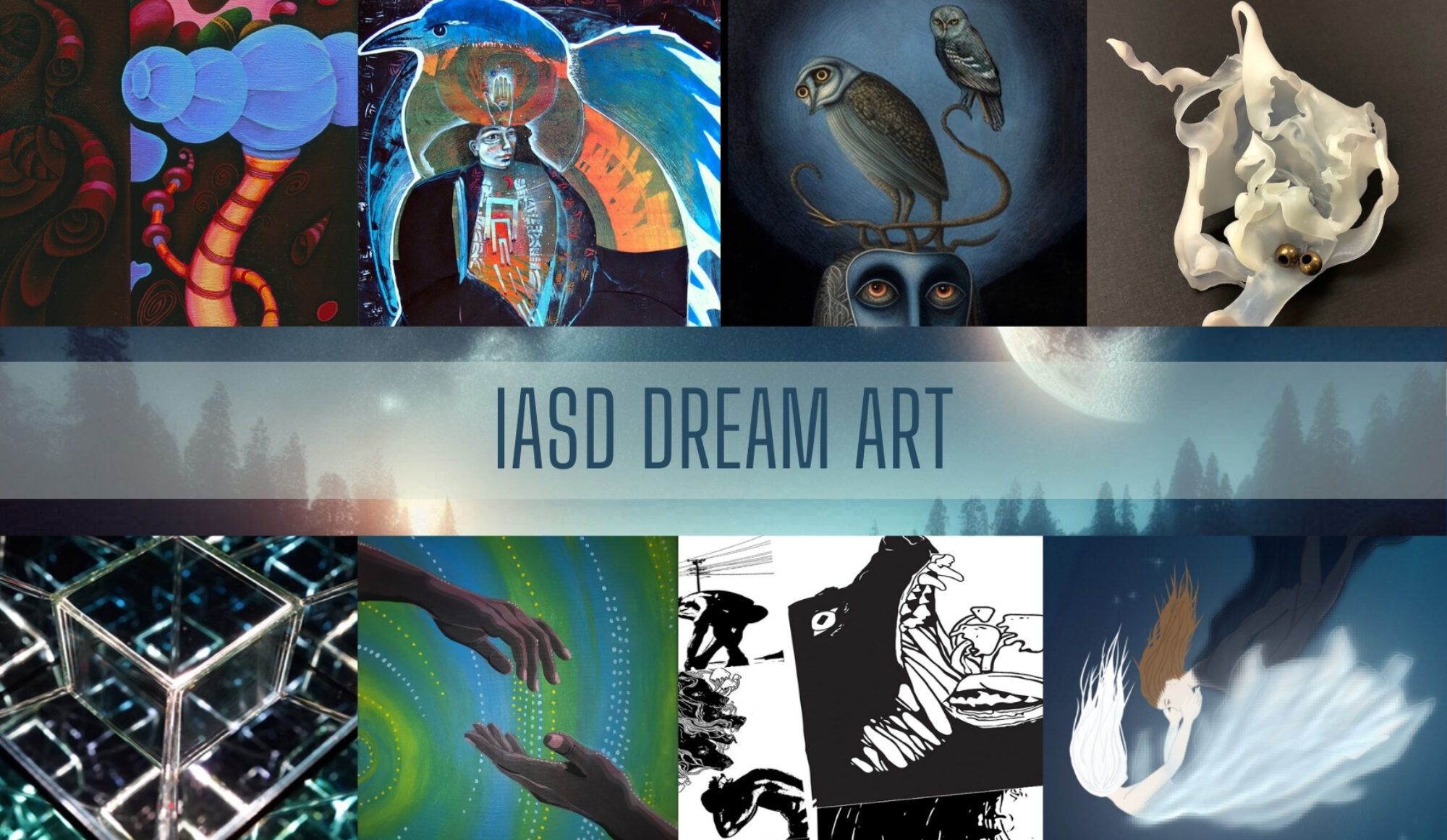
ARTIST OF THE MONTH-OCTOBER
“The paintings sort of “crystallize” the emotional valence of the dream.”
Devin Good
An interview with artist Devin Good
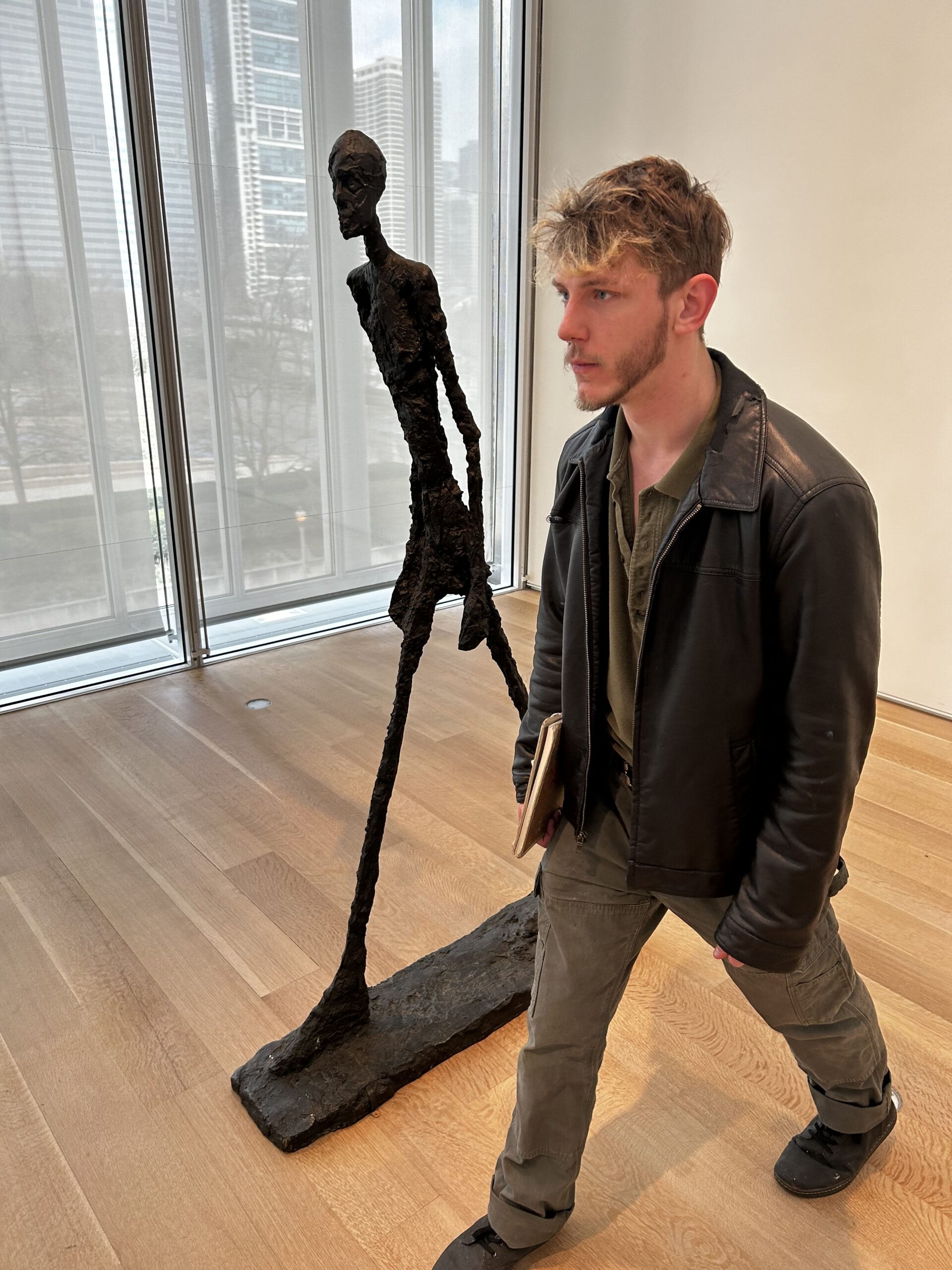
1. What mediums do you use in creating your art and why did you choose that medium?
For the most part, I would consider myself a painter, but some dreams lend themselves to other media and I’ve been exploring that recently. For most of my paintings, I collect dozens of images and blend them together one-at-a-time as I’m painting them – it feels a bit like collaging with paint. I used to make actual, proper fully completed collages that I would paint on a large scale, but it felt like I would “figure too much out” before I ever got to the painting process and there wasn’t as much discovery while I worked. I ended up finding out that this new way of working is both faster and more enjoyable, and there are more little accidents that feel dreamlike.
2. What is the relationship between your art and dreams?
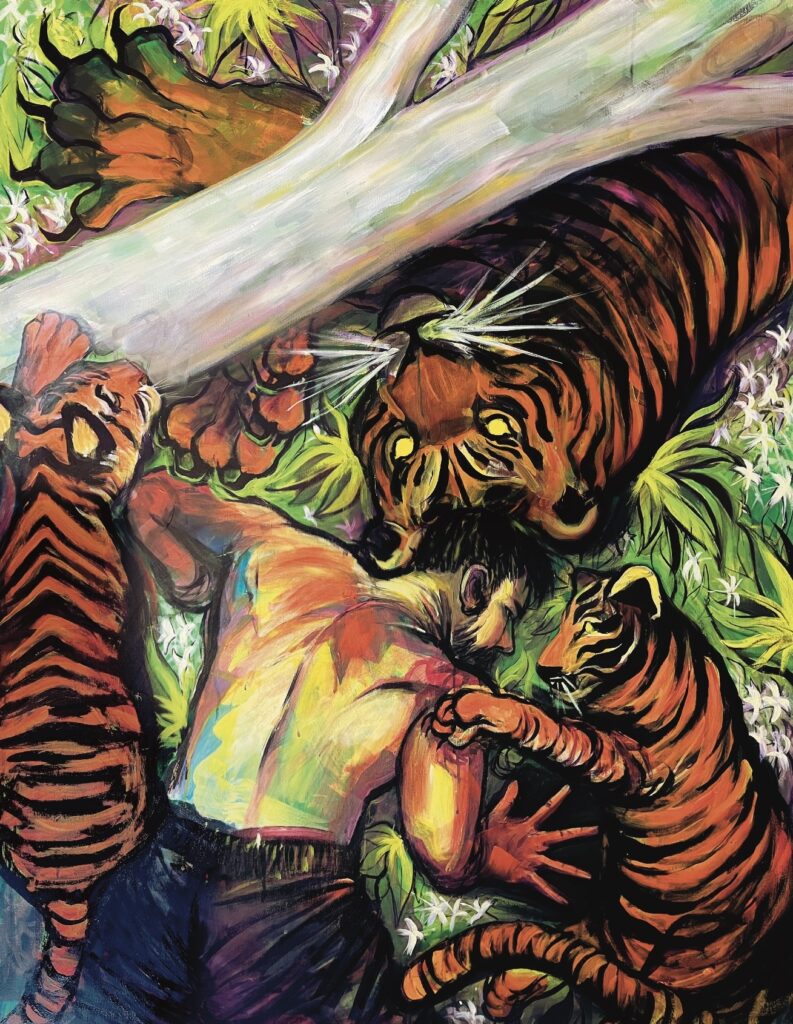
My art is very much concerned with both the narrative and experiential component of dreams. I keep a nearly encyclopedic dream journal and keep track of the strongest images and stories that emerge, and I usually leave interpretation out of the process. The tricky part is that most of my dreams have several images, and I have a hard time deciding on which image to paint. I’ve dabbled in comics as well, but when I add too much narrative I lose the experiential, immersive quality, and it feels a bit more alienating for the viewer. I can either elucidate the narrative of the dream, or depict how the dream feels. My practice feels like a constant push and pull between these contrasting creative desires, or the tension of opposites as Carl Jung would say.
3. Does creating art based on dreams influence your dreams? If so, how?
I’ll see paintings, sculptures, installation exhibits, comics, and sometimes even hear songs in my dreams. For a while, I kept trying to make painting do everything. Funnily enough, my dreams have shown me that one medium is not enough to capture the all-encompassing and diverse nature of dreams. Some dreams are experiential and immersive, and would make for better paintings or installations. Some dreams show me objects that would make for great sculptures, others are stories that make more sense as a short comic. If anything, creating art based on dreams has made my dreams an even more aggressive taskmaster. The psyche is trying to get me to break out into new ways of exploring its multiplicative nature.
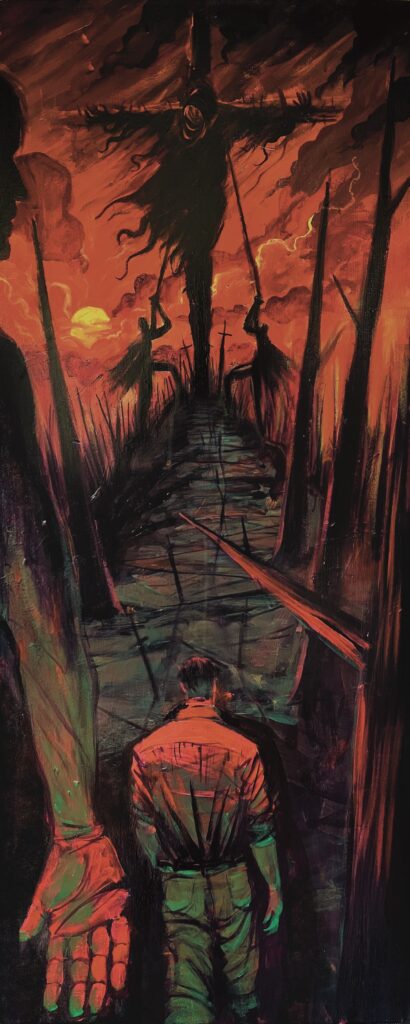
4. Does the dream art you create give new meaning to what the dreams are saying to you? Explain.
Yes. This is something that Carl Jung mentions in his talk The Aims of Psychotherapy – “The concrete shaping of the image enforces a continuous study of it, in all its parts, so that it can develop its effects to the full. This invests the bare fantasy with an element of reality, which lends it greater weight and greater driving power.” I don’t really have a concrete “dream interpretation” practice – the act of painting the dream often serves as the interpretation itself, and by making the painting, I understand the dream better. The paintings sort of “crystallize” the emotional valence of the dream.
5. Do you have a short story about the creation of a particular piece of dream art?
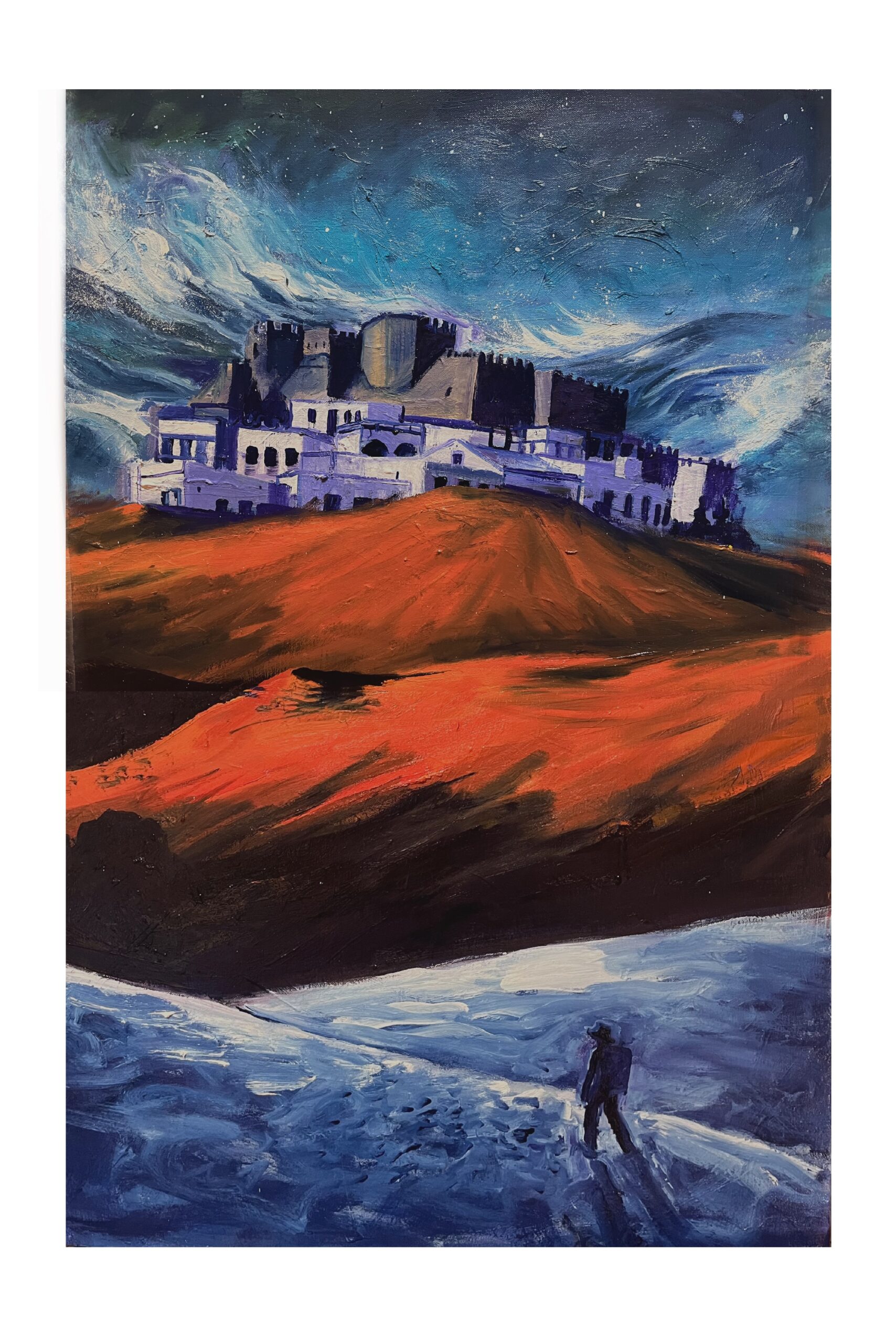
Most of the dreams I paint aren’t painted in chronological order. I’ve had dreams from over 10 years ago that I still return to every now and then because they were particularly important for my growth – the painting of the Wizard and the Moon was a moment from my first lucid dream when I was 14 years old. I flew around the field outside of my dad’s house and landed in a pasture, where a wizard was practicing some spells, and he advised me that spinning around in the dream could prolong it and change the time of day. It worked, but then I tried to go to the moon and I accidentally blew it up. He wasn’t happy about that. That first dream was sort of like my call to adventure, and I’ve been journaling ever since.
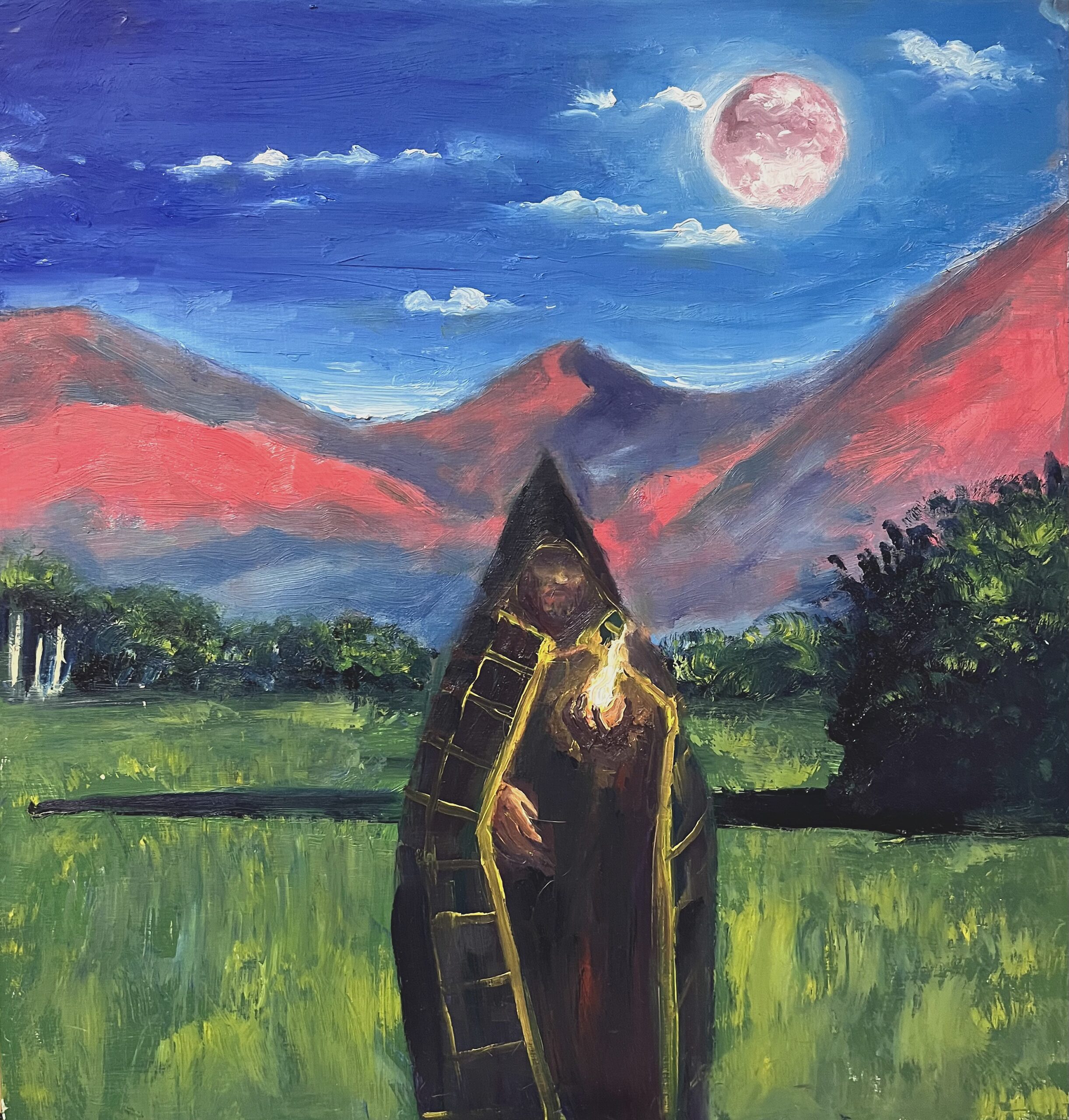
The Wizard and the Moon, oil on wood panel, 25x25in, 2026
6. Anything else you would like to say about dream art?
All I have to say is do it. Working with dreams has provided me a virtually limitless source of inspiration – I suppose my only problem is figuring out what to do with all of it!
To see more from Devin Good visit the website https://www.devingoodstudio.com or instagram page @devin.paints
ARTIST OF THE MONTH-SEPTEMBER
“What I create, creates me.”
Denise Kester
An interview with printmaker Denise Kester
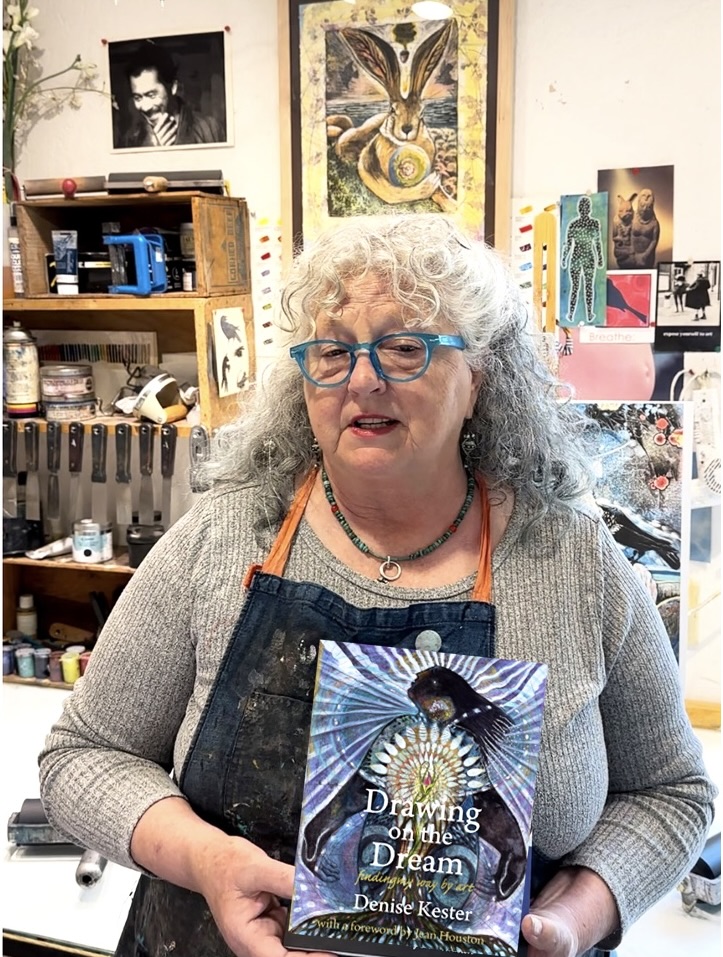
1. What mediums do you use in creating your art and why did you choose that medium?
I am a printmaker specializing in viscosity printmaking. I make monoprints and monotype prints. I create my art by using oily lithography inks on a Plexiglass sheet, called a plate. I use rubber rollers, brayers and palette knives to lay color, and Q-Tips for drawing and wiping away. Everything is layered and created on the surface of the Plexiglass plate. When the inked plate is complete, I place paper on top of the wet image and run it through an etching press, creating a unique, original print.
This medium allows me to work quickly and intuitively.
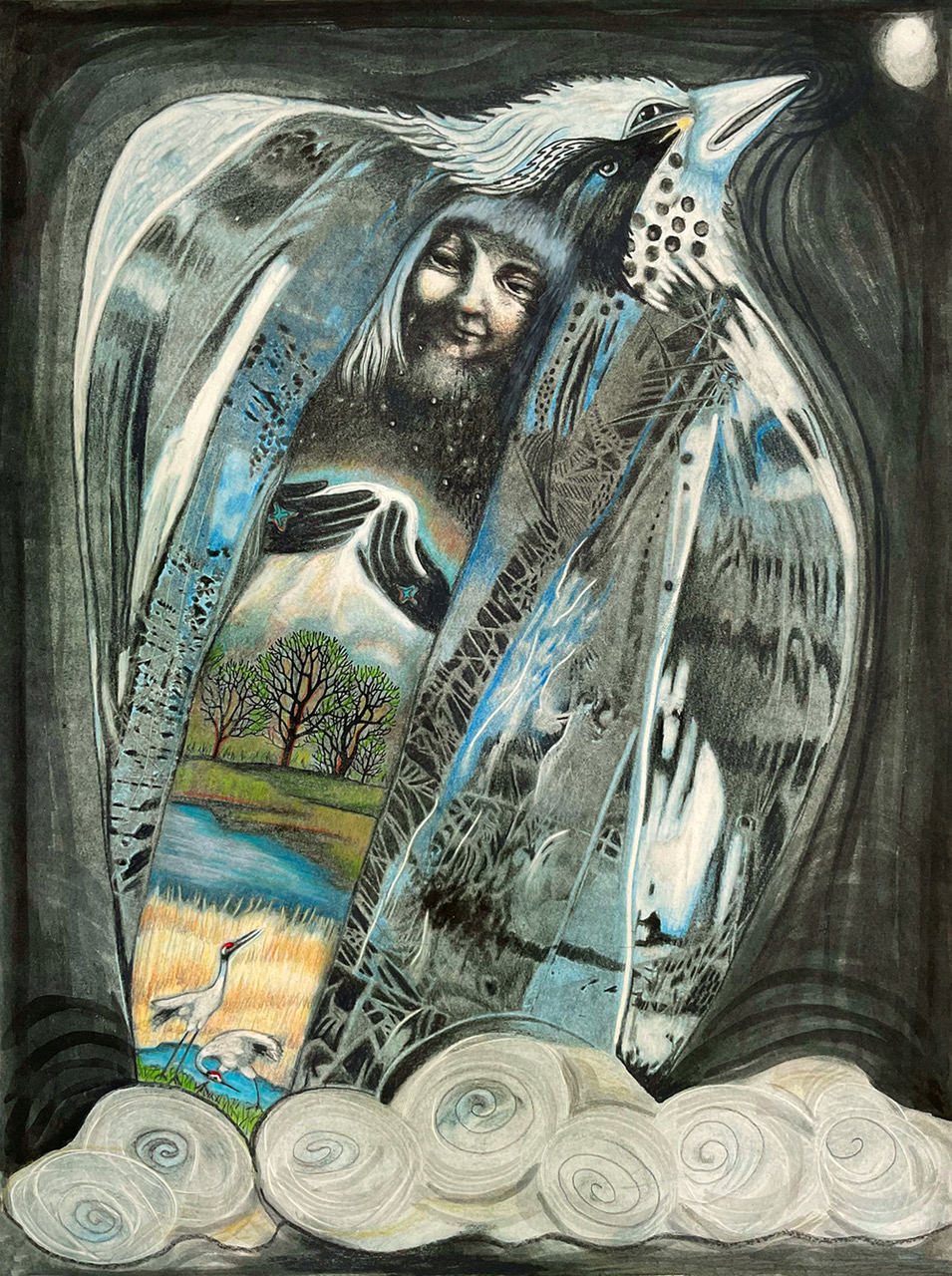
2. What is the relationship between your art and dreams?
I first began drawing my dreams when I was a teenager. This helped me to better understand my dreams. It felt important for me to bring my dream images to my waking life. Now, my dream life and art life are fully intertwined. My art is a visual story that I dream and that dreams me. My art is an expression of my dreaming earth soul realizing itself. But not just that – what I do is a reflection of my heart’s experience making itself visible. But it’s more than that too, my art has a story of its own and a life of its own. What I create, creates me.
3. Does creating art based on dreams influence your dreams? If so, how?
I love creating from my dreams because this lets the dream know that I am taking it seriously and that I am paying attention, which deepens my relationship to the dream, making my dream life stronger.
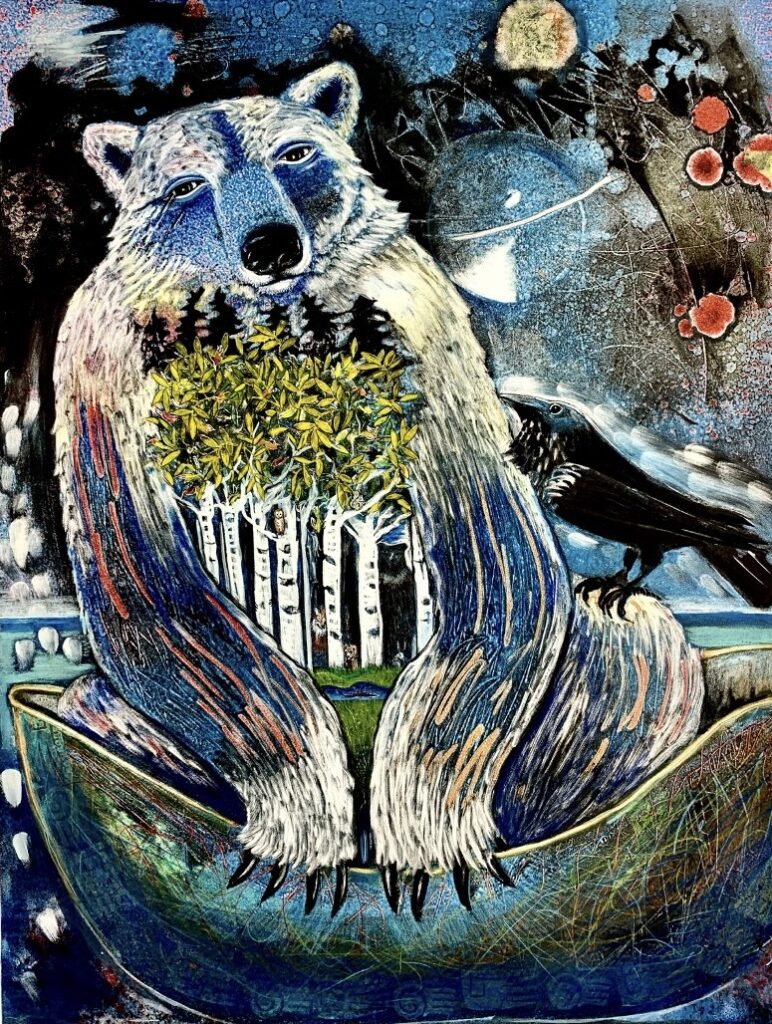
4. Does the dream art you create give new meaning to what the dreams are saying to you? Explain.
When I create directly from my dream it brings my dream alive and makes my dream and the revelations in the dream potent and clear to me. It is also my way of honoring my dream. Honoring my dream keeps my relationship with my dream compelling and passionate. I trust my dreams and what they are trying to tell me. It is important for me to continue to connect and draw from my dreams in order to nurture this relationship.
5. Do you have a short story about the creation of a particular piece of dream art?
This dream story is about Earth Girl Intertwined.
Two women artists have come to talk to me about my art. We are looking over my artwork, paintings and prints. I notice a little viewing machine. I look in and I see an old painting of mine.
It is a painting of myself. I have a cedar tree going up my body like a spinal cord. The tree is part of my body with limbs going out. The branches are also going up and out of my head. I have brown hair. Branches go down the trunk to roots coming down from my body into the ground.
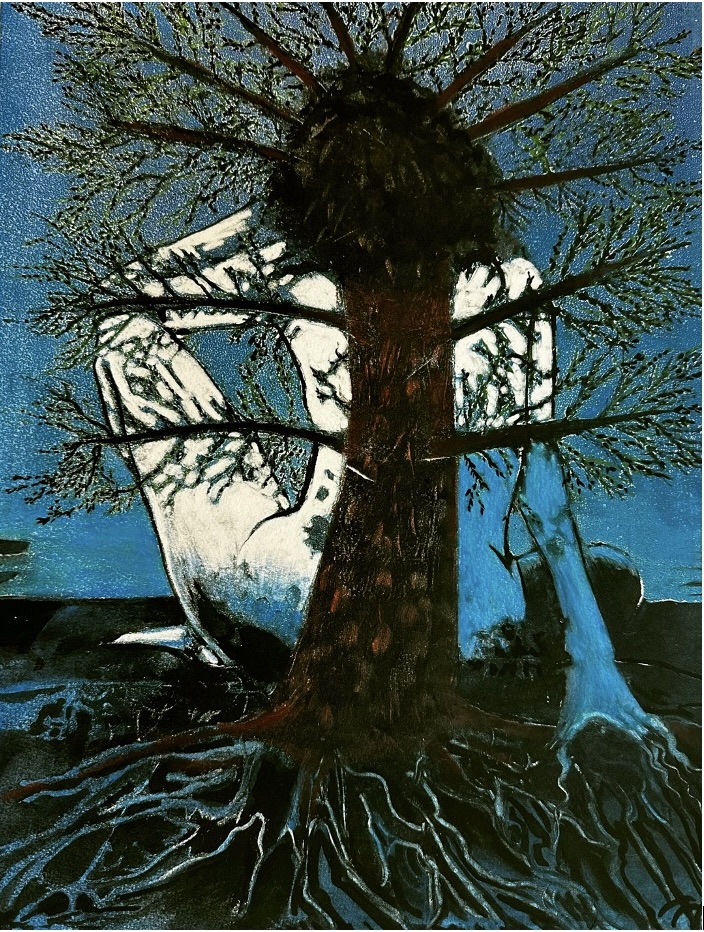
Earth Girl Intertwined | 13 X 18 monotype
6. Anything else you would like to say about dream art?
Making art is a sacred relationship between my heart and the life force of the Universe. Dream work and art work help me connect with the multi levels of life’s complexities.
I draw from my dreams and my dreams draw from me. The animals and dream figures that appear in my work are my allies, teachers and guides. In my dreams and in my art they reveal to me a clear pathway through my life, for this, I am grateful.
To see more from Denise Kester visit the website www.drawingonthedream.com or instagram page @denisekester
ARTIST OF THE MONTH- AUGUST
“Dreams have taught me how to be the artist I already was.”
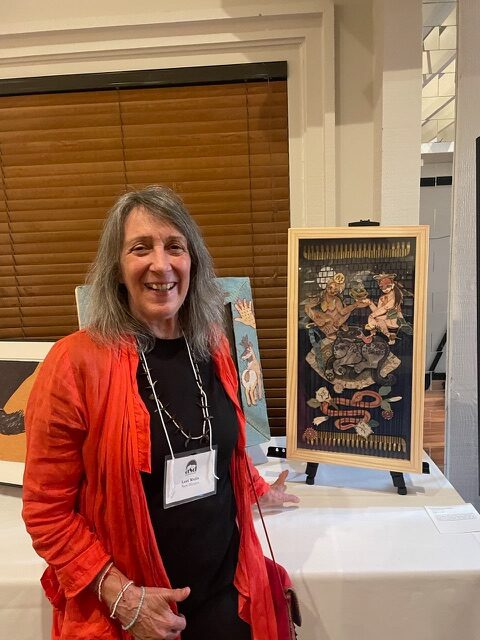
Lori Wells
An interview with Lori Wells
1. What mediums/process do you use in creating your art and why did you choose that medium/process?
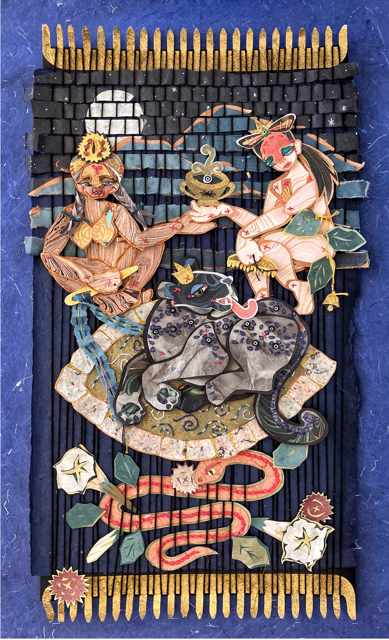
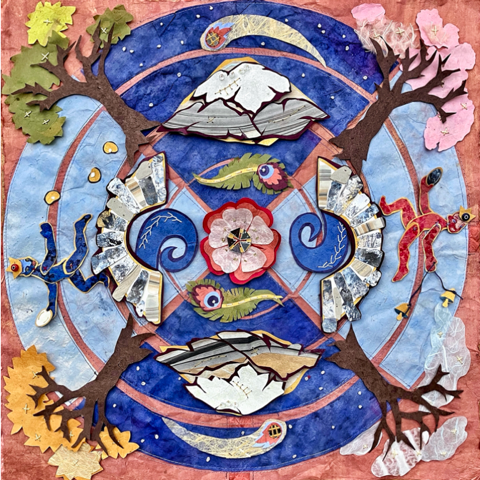
My work combines cut paper, hand embroidery, painting and collage to create layered reliefs that feel somewhere between paintings, textiles, and small altars. This process grew directly out of dreams. I began having dreams of sewing, collecting thread and beads, and embellishing surfaces as a form of prayer. Around the same time, I remembered making cut paper mock-ups for ceramic murals while working in a clay studio years ago. Those memories and dreams braided together into the visual language I now use. Dance also shapes my work. Many dreams arrive through gesture before they arrive through story, so the figures often hold expressive, almost impossible poses that embody the dream body feelings, urgings, and wisdom.
2. What is the relationship between your art and dreams?
I don’t illustrate dreams; I stay in relationship with them. I begin with dreams whose images continue to visit me long after waking, either because of their healing potency or mythic potency or because their strange beauty refuses to leave me. In dream circle we work with gesture, symbol and association until the dream begins revealing deeper layers of meaning. Only then do I begin making art, allowing metaphor, myth and imagination to carry the dream into another form.
3. Does creating dream art influence your dreams?
Dreaming and art creation have become a two-way conversation. The more faithfully I respond to my dreams through art, the more my dreams trust me with new images. They have become increasingly tactile and instructional and filled with wonder. I dream of costumes, embroidery, ceremonial dance, galleries filled with my work, even the studio itself. When we named my studio “the enchanted hatchery,” a dream came to me that taught me how to bless it with stitching and sacred words. Rather than simply inspiring finished pieces, my dreams have slowly become collaborators in my creative life.
4. Does the dream art you create give new meaning to what the dreams are saying to you? Explain.
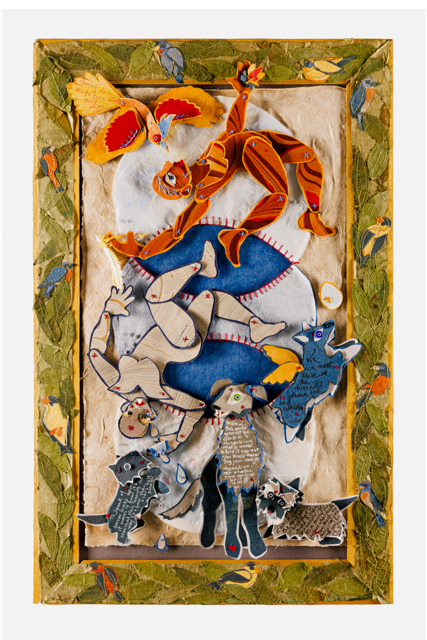
Most certainly. I am making art not only for myself; I am constantly listening for symbols and characters and words that might resonate with others. That might evoke a feeling or an emotion or a recognition. In a dream where I was visiting an older woman in a nursing home, as I worked with the dream, I began to relate to the older woman as myself. I began to wonder how I might honor and make peace with my own passage into elderhood. In a dream where I was attending a garden party with an unusual bird and four elderly or deceased dogs, I wondered who the bird might be. A phoenix? The art that emerged became a piece about the cycles of grief.
5. Do you have a short story about the creation of a particular piece of dream art?
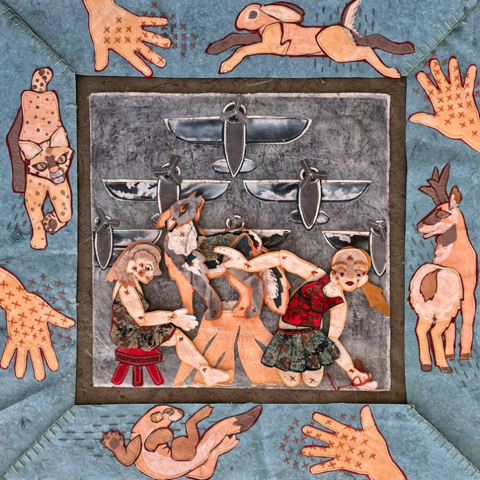
I had this dream where my stepdaughter and I are sculpting animals out of clay while overhead, bombers approach. People are shouting at us to stop—after all, the end is near. But we keep creating.
In the dream we were making animals who used to live here. So, I dove into researching animals who once lived here in Albuquerque. I chose the Mexican Gray Wolf as the central figure because they were completely wiped out and are now being reintroduced.
In making my art, I usually look for the healing image. The invitation to fall in love with the earth. The gentle call to action. And that is still here. But this dream asks me not to turn away. To make space for urgency. For grief. Even for despair.
The dream seems to whisper: Stay awake. Keep engaging with what matters. Keep creating what honors life.
The hands surrounding the composition are stitched in sashiko, a traditional Japanese mending stitch. They remind me that humans are not above creation but within it. We are only one set of hands participating in the ongoing work of repair.
6. Anything else you would like to say about dream art?
Dreams didn’t make me into an artist. They taught me how to trust the artist I already was.
Dreams are the doorway, but they are no longer the subject. They are my pathway into conversations with ancestors, landscapes, animals, fungi, grief, repair, devotion, and imagination.
When my work began flowing from the liminal river of dreams, ancestral whisperings, and the wisdom of the land, I found my artistic home. Each piece has become an act of remembering that we belong to the living world and to the long lineage of people who have loved it.
To see more from Lori Wells visit these links
Substack: https://lorimike7.substack.com
Instagram: https://www.instagram.com/lorimike7/
Facebook: https://www.facebook.com/lorry50
Website: https://www.lorimwells.com
ARTIST OF THE MONTH- JULY
“Recreating dream scenes while awake often brings me into a powerful altered state of consciousness.”
Hazal Orhon
An interview with transdisciplinary artist: photography and video art, Hazal Orhon
1. What mediums do you use in creating your art and why did you choose that medium?
I work primarily with photography, video art, and film, and occasionally create installations for exhibitions. During the creative process, the camera is sometimes like an eye for me, sometimes a tool behind which I become invisible, and always an extension of my unconscious; almost like a limb. This relationship goes back to my adolescence. I have always loved taking photographs and still have many albums from my middle and high school years, filled with images of my family and friends. I am interested in making the invisible visible; for me, the camera is a tool that can reveal what is usually unseen.
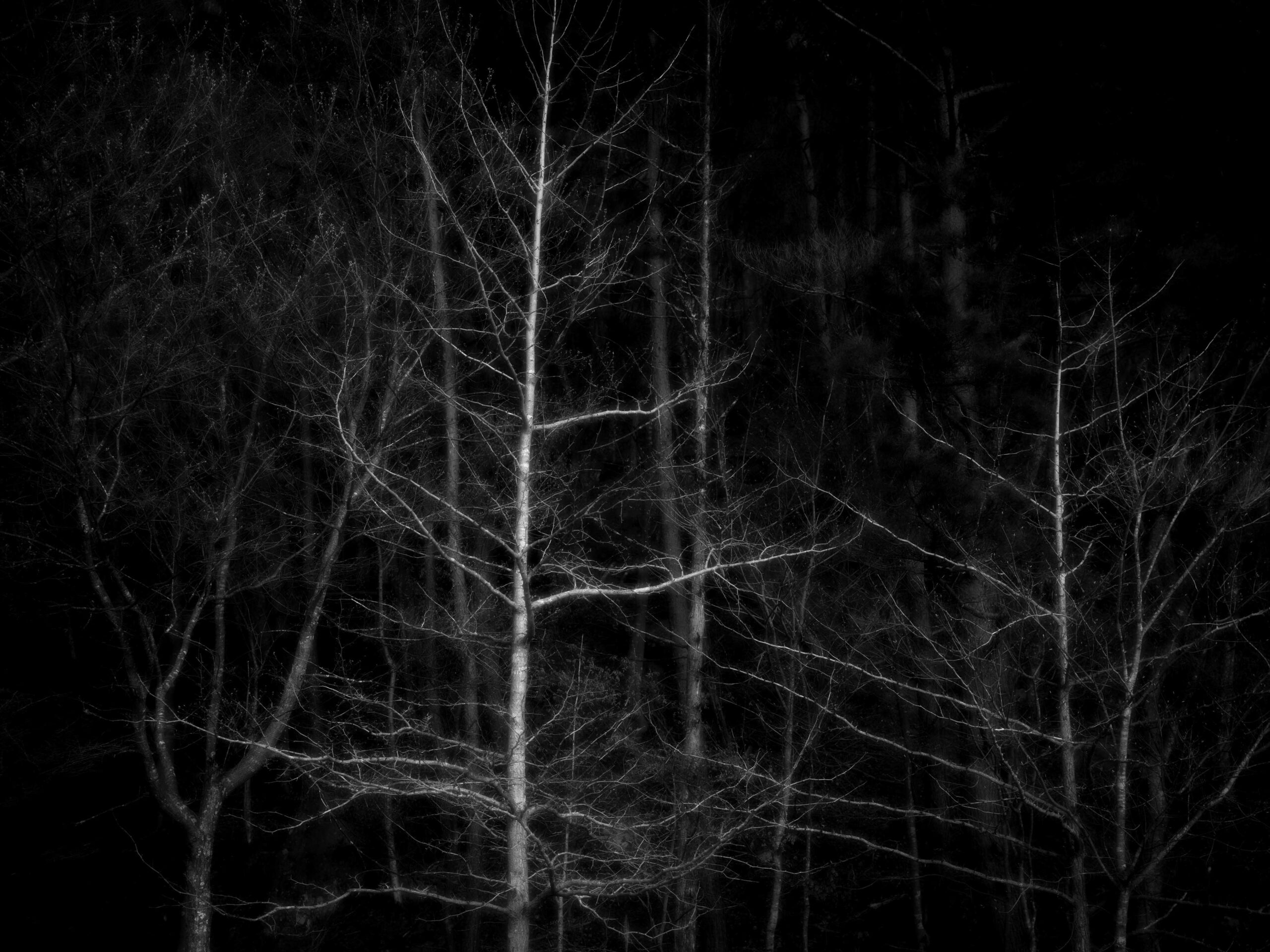
2. What is the relationship between your art and dreams?
My work is generally shaped around time, space, memory, and the senses. To engage with these themes, the unconscious plays a crucial role, and dreams, I think, are the most important way of accessing it. Through the relationship between my art and my dreams, both my artistic practice and, in a way, my dreams themselves come into being. I would say they are in constant and powerful dialogue with one another. Transforming dreams into creative work can be a healing process; it helps a person become more whole. I believe that wholeness, self-confrontation, and meeting one’s shadow can reduce the potential for conflict, both within oneself and with others. I work with my dreams because I am interested in becoming a better human being and cultivating healthier, more meaningful relationships.
3. Does creating art based on dreams influence your dreams? If so, how?
Yes, it does. I already touched on this in my previous answer. The part of me that experiences dreams feels heard and seen when I give form to those experiences through creative expression. As a result, my dreaming self and my waking self seem to develop a more harmonious and collaborative relationship. There are times when I feel immersed in a continuous process of creation, both while awake and while asleep. Dreams feed my artistic practice, and artistic practice, in turn, influences my dreams. I feel grateful to be able to use my mind in this way and to experience such an ongoing dialogue between creativity and dreaming.
4. Does the dream art you create give new meaning to what the dreams are saying to you? Explain.
Absolutely. When I create art from my dreams, I enter into a new relationship with them. This relationship develops between my conscious self and my dreaming self. Engaging with my dreams through waking consciousness and giving them creative expression helps me better understand my unconscious experiences. In this way, I come to know myself more deeply. What my dreams are telling me are, in fact, things I am telling myself. It is me speaking to myself through my dreams. Creating art from them allows that dialogue to become more visible, tangible, and meaningful.
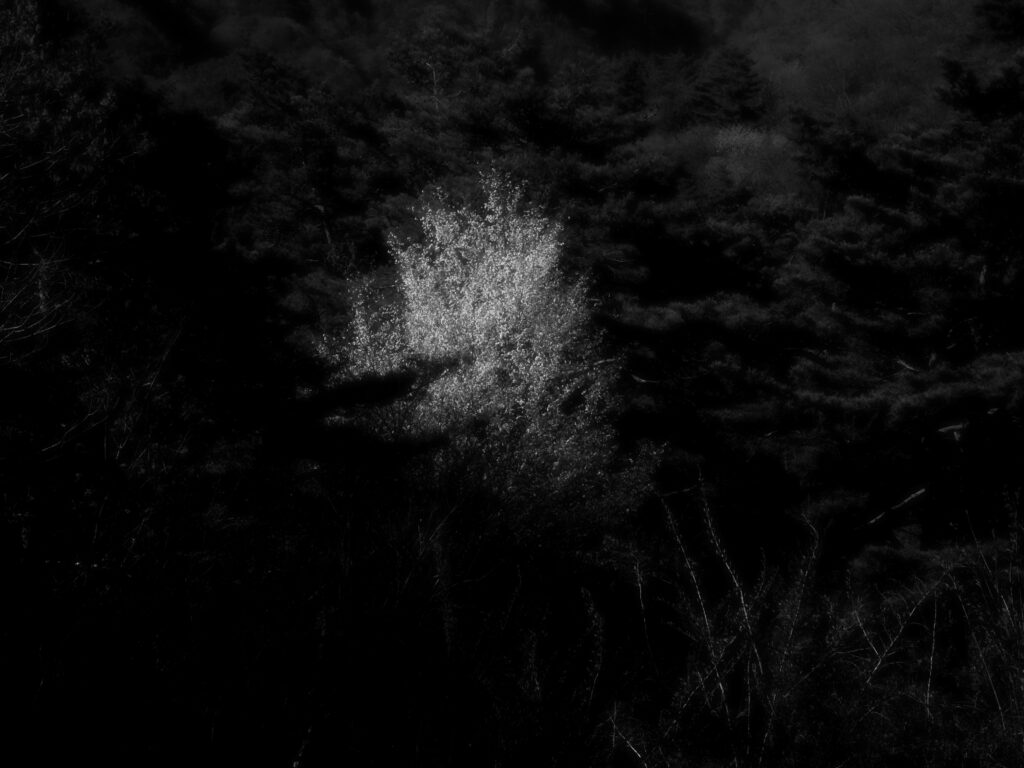
5. Do you have a short story about the creation of a particular piece of dream art?
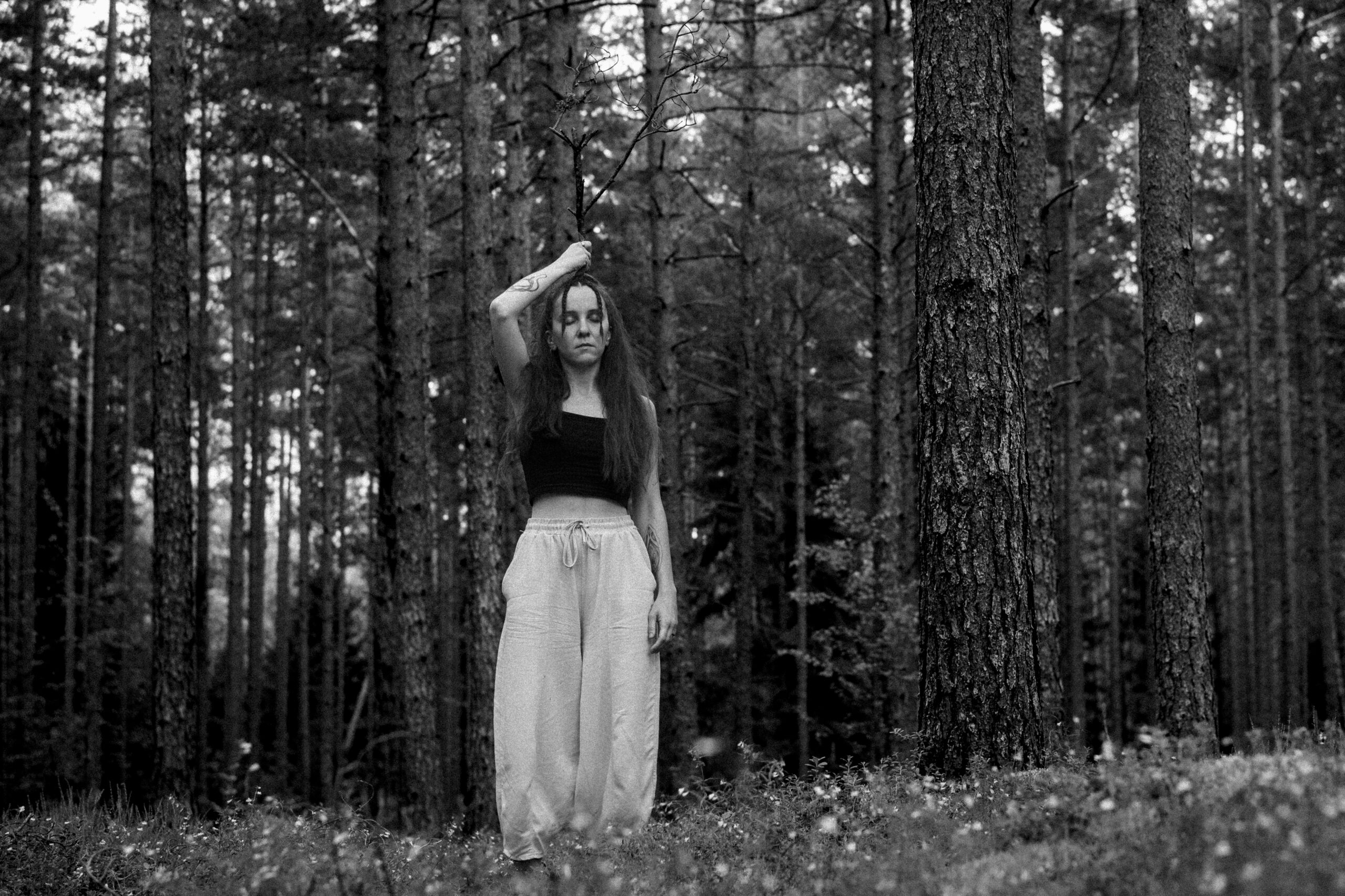
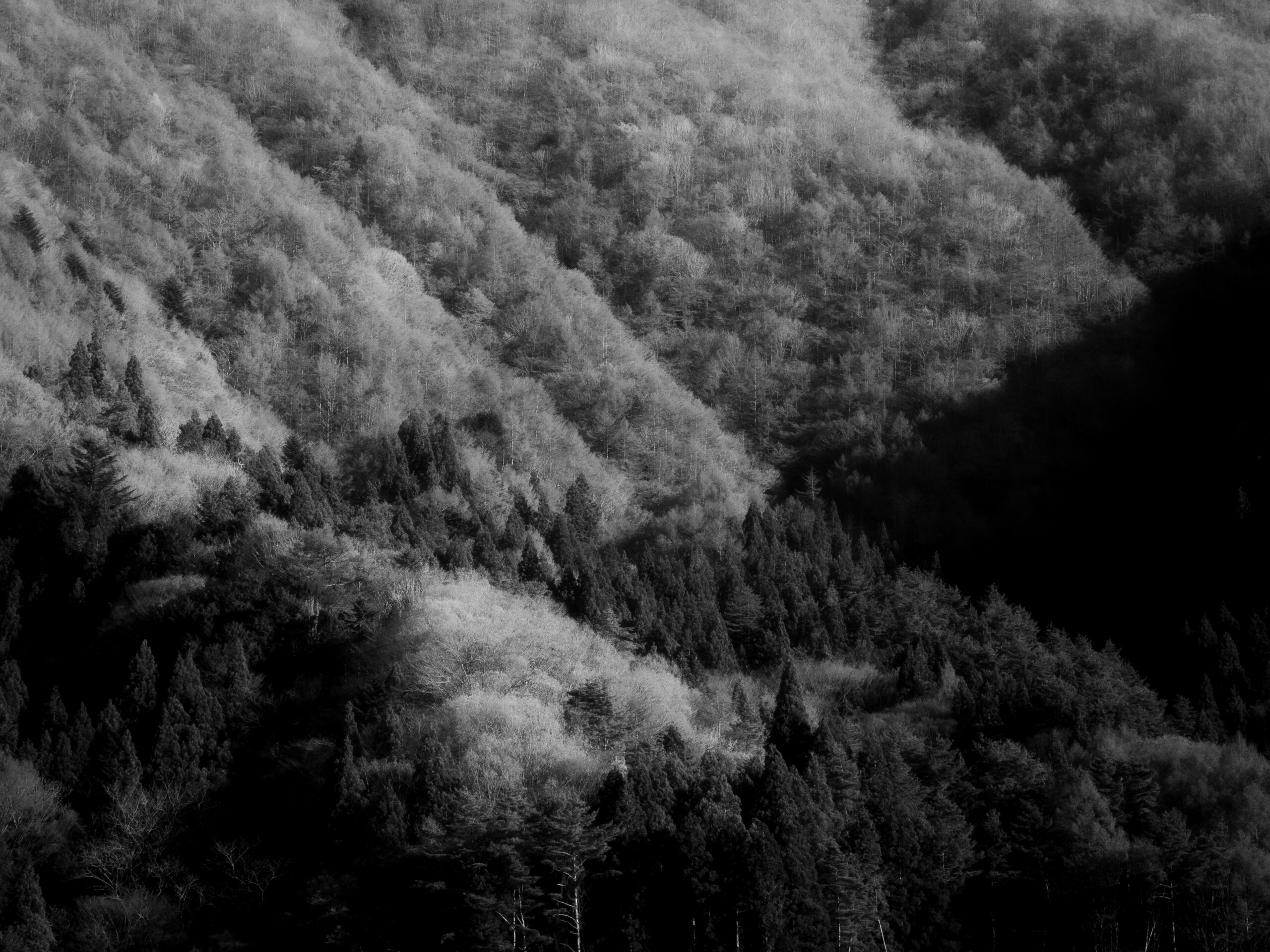
Lately, I have been thinking about and filming the trees that keep appearing in my dreams. These recordings will eventually become video art pieces, and I hope they will be exhibited this autumn in Turkey as part of Awakening to the Dream-Self, an exhibition project of which I am the founder and one of the participating artists.
Recreating dream scenes while awake often brings me into a powerful altered state of consciousness. Every dream is different, and working with each one has its own unique process. While filming these trees, I find myself reconnecting with my dream imagery through waking awareness. Each time I step into a scene inspired by a dream, I enter a different state of being.
The altered state that emerges through this process feels like a particular kind of mindfulness practice. Through the dreams I have experienced, I am able to engage with my unconscious while awake. Sometimes it feels as though insights and forms of knowledge that I could not fully grasp while dreaming are gradually absorbed by my body through the act of artistic creation. I deeply value this experience.
Working with dreams is not always easy. It can lead to profound confrontations, unexpected revelations, and moments of vulnerability. Yet I have found it to be one of the most effective ways of understanding myself, expanding my awareness, and nurturing my creative process.
6. Anything else you would like to say about dream art?
I believe that every artist who is connected to their intuition is in dialogue with their dreams, whether they are aware of it or not. Creativity emerges from the unconscious, and the unconscious is the home of dreams. For this reason, I do not think it is possible to completely separate creativity from dreams. Dreams can offer artists a direct encounter with aspects of themselves that are often inaccessible in everyday life. Whether they become the subject of an artwork or simply influence the creative process in the background, I believe dreams have the potential to enrich artistic practice in profound ways.
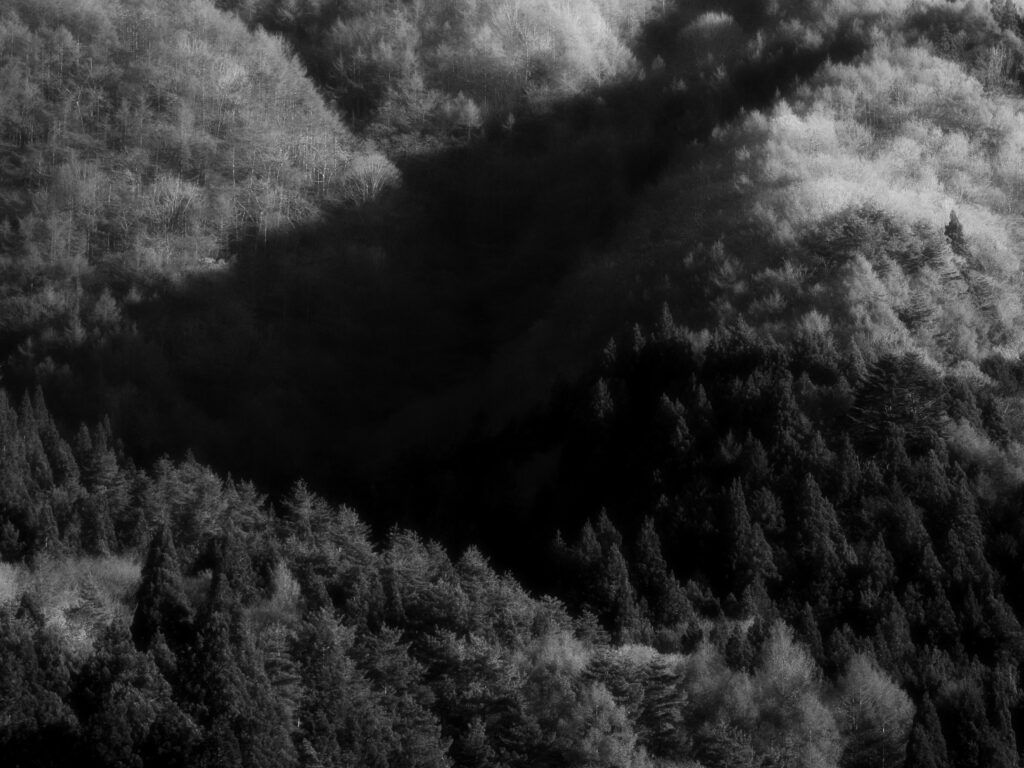
To see more from Hazal Orhon visit the instagram page @hazalorhon
ARTIST OF THE MONTH-JUNE
“My work investigates how an art practice can help track, induce, and cultivate lucid states…”
STEVEN BALDINO
An interview with the artist and teacher Steven Baldino
1. What mediums do you use in creating your art and why did you choose that medium?
I primarily work with oil paint because it gives me the most flexibility and control. Its slow drying time allows me to continually refine and manipulate the surface over extended periods. I approach painting sessions as durational, embodied meditations, and enjoy working with a relaxed focus for long stretches at a time. Oil paint supports this process by remaining fluid and responsive throughout the session.
2. What is the relationship between your art and dreams?
I approach artmaking as a contemplative practice. For the past two years, I’ve explored how it can support lucid dreaming practices drawn from Dream Yoga, a Vajrayana Buddhist system associated with lucid dreaming, which I’ve been engaging through contemporary teachings and historical texts. My work investigates how an art practice can help track, induce, and cultivate lucid states across sleep onset, dreaming, and dreamless sleep. Each artwork functions as part of these contemplative experiments. Artmaking, Dream Yoga and neuroscience have an interesting overlap in how imagination plays a role in perception.
3. Does creating art based on dreams influence your dreams? If so, how?
Definitely. I structure painting sessions as extended meditation periods intended to calm and stabilize the mind before nighttime dream practices. Because of this, the act of painting influences my dreams more than the finished works themselves.
What interests me most is the relationship between lucid dreaming and observational artmaking. To become lucid in a dream is to observe one’s surroundings to the degree that one can differentiate the dream reality from waking reality. When this habit of observation is cultivated during waking life, it can carry over into dreams and trigger lucidity. I’ve found this resembles the same heightened attention used in observational painting, and in that sense, I view observational artmaking as a form of lucid awareness.
4. Does the dream art you create give new meaning to what the dreams are saying to you? Explain.
Absolutely. This current way of integrating artmaking with contemplative dream practice hasn’t just given new meaning to my dreams, but also to my waking life. I’m very inspired by the reciprocal relationship Dream Yoga highlights between one’s dreaming and waking consciousness and I feel that artmaking is a powerful tool to help realize this connection. I’m experientially learning that dreams and waking reality are both experienced through the mind, and therefore both have an illusory, flexible quality to them. I find this view gives a lot of agency to the dreamer, whether awake or asleep.
5. Do you have a short story about the creation of a particular piece of dream art?
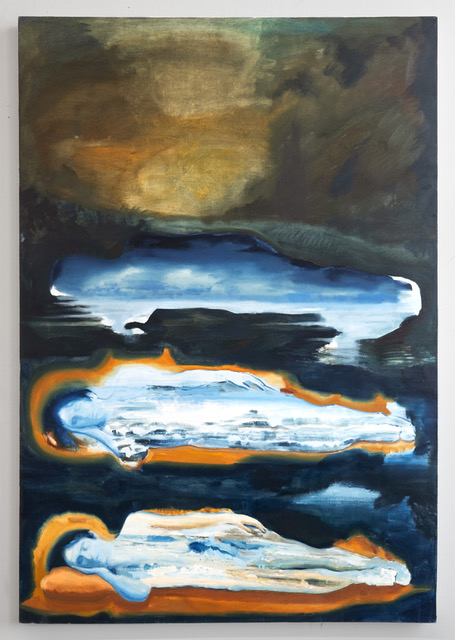
For the painting Nov. 3rd 2025 (In the sky of mind), I was inspired by Tibetan Buddhist sky-gazing meditations and created a work composed of twenty-four consecutive one-hour sky studies completed in a single uninterrupted session. Treating the sky as an object of meditation, this work used sustained observation as both subject and method. I’ve continued the In the sky of mind series with paintings lasting anywhere from nine to twenty-four hours.
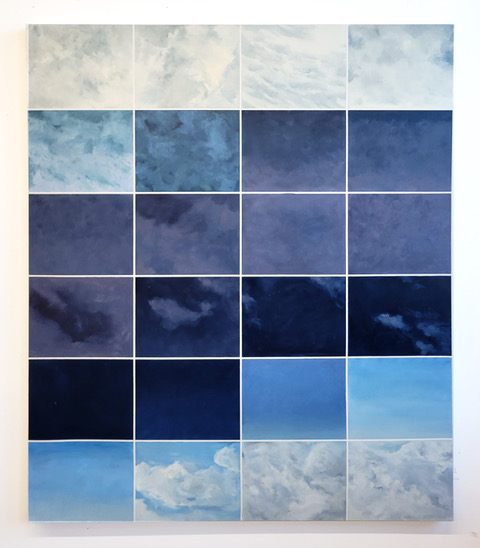
Nov. 3rd 2025 (In the sky of mind). 2025. Oil on linen 70 x 60 x 2 in.
After completing one of these paintings, I engage in lucid dreaming induction practices, using the prolonged act of observation as an induction method. Since the beginning of this series, I have also begun to make drawings in the sky during my lucid dreams.
6. Anything else you would like to say about dream art?
It’s so exciting to see contemporary neuroscience increasingly engage with ancient contemplative practices in order to better understand the nature of mind and consciousness. I believe artmaking has an important place within that conversation.
In looking at Dream Yoga, lucid dreaming, and artistic practice, I’ve noticed several shared skills across all three disciplines: observation, relaxation, intention, and visualization. There are compelling accounts of yogic practitioners using these capacities to profoundly shape their experience of mind and perception. As an artist, I’m interested in exploring these possibilities directly, and I believe artmaking is uniquely suited to that kind of investigation.
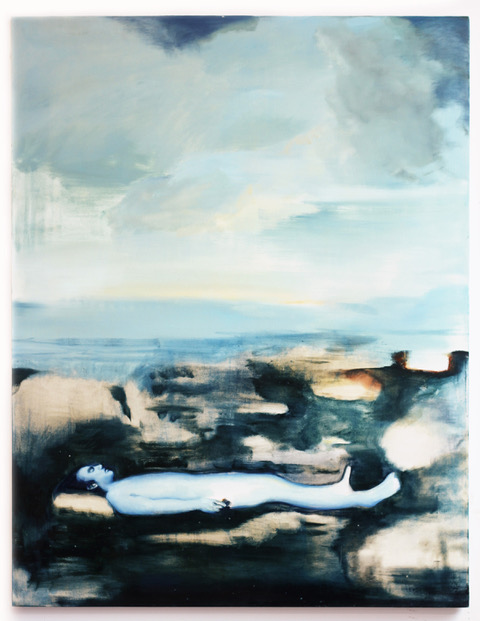
To see more from Steven Baldino visit the website https://www.stevenbaldinoart.com or instagram page @stevenbaldinoart
Submit to our annual Dream Art Exhibit for a chance to be featured in our next Artist of the Month!
ARTIST OF THE MONTH- MAY
“Painting gives me the physical space to layer, revise, obscure, and reveal”
Amy Lloyd
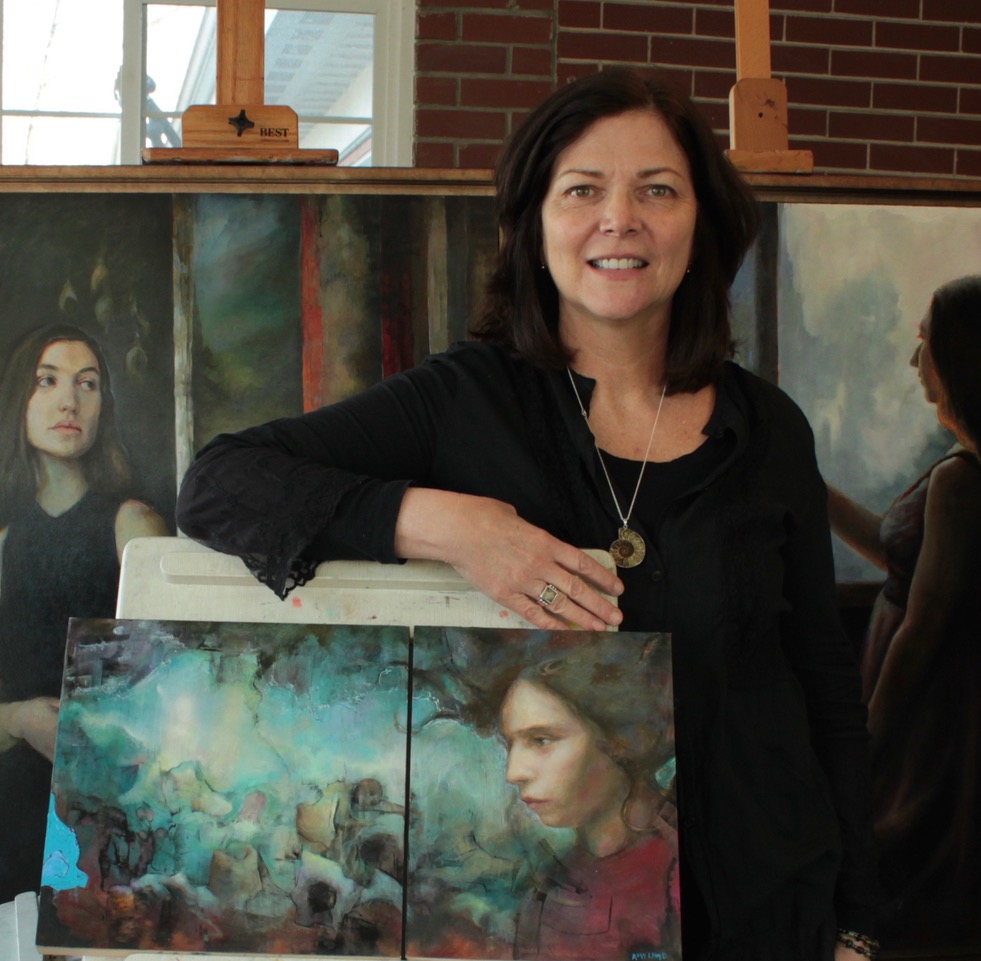
An interview with the dreamer and painter Amy Lloyd
1. What mediums do you use in creating your art and why did you choose that medium?
I work primarily as an oil painter, grounded in classical figurative training, but my practice has evolved into a more fluid, layered approach that allows intuition and symbolism to lead. My training gave me structure, discipline, and a deep understanding of how to construct the external world. That foundation was essential. It allowed me, over time, to confidently move beyond representation and into the inner landscape. Painting gives me the physical space to layer, revise, obscure, and reveal—much like memory and dreams themselves. It’s a medium that can hold ambiguity, emotion, and transformation without needing resolution.
2. What is the relationship between your art and dreams?
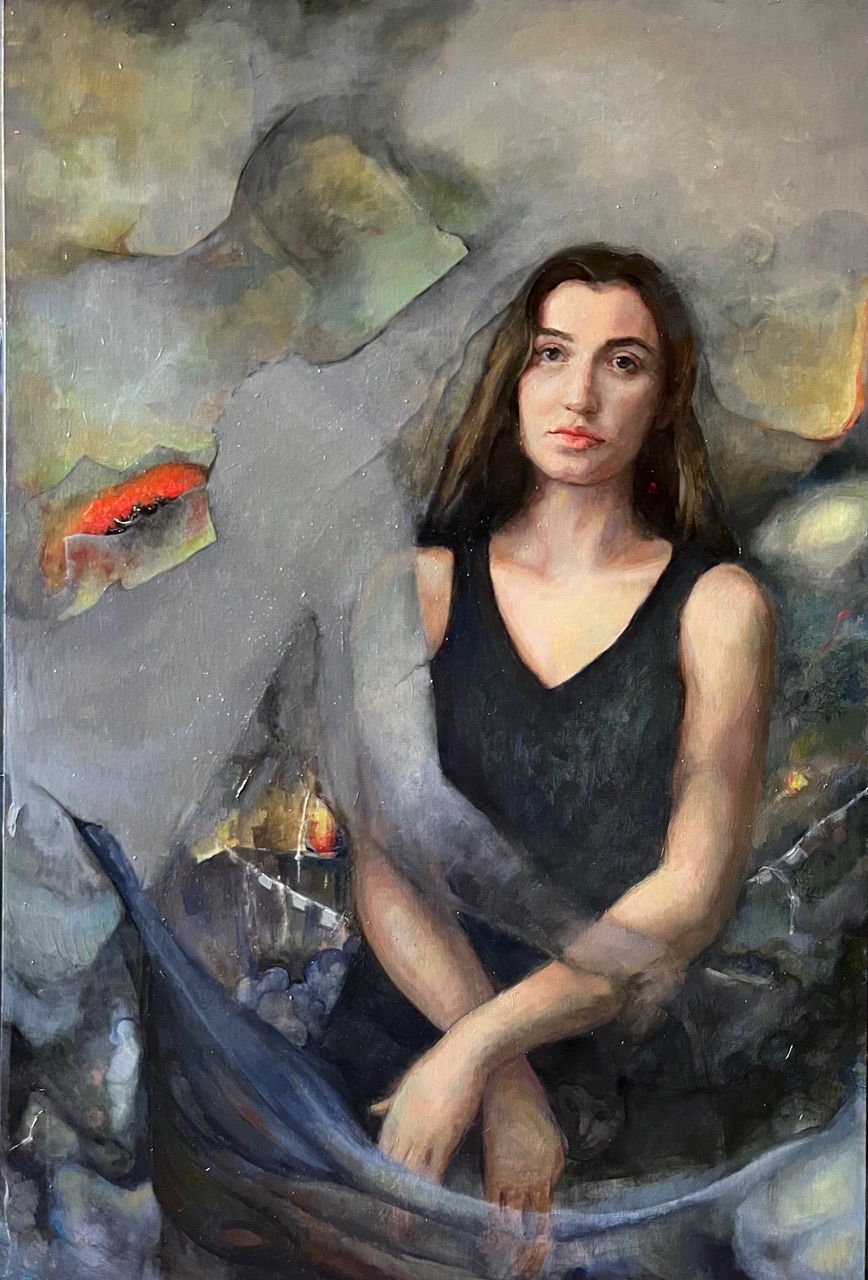
My art is not an illustration of dreams—it is dream work. Dreams are the definition of creativity itself: an endless source that bypasses logic and speaks directly through symbols, emotion, and sensation. They strip away the noise of the external world and reveal what is moving beneath the surface. My paintings emerge from that same inner terrain. They are a continuation of the dream state, translated through gesture, form, and color rather than narrative or explanation.
3. Does creating art based on dreams influence your dreams? If so, how?
Yes, very much so. The relationship is symbiotic. Dreams feed the artwork with raw imagery and emotional truth, and the act of painting deepens my engagement with the dream world. Working this way strengthens dream recall and insight. Painting often feels like entering the same altered state as dreaming—timeless, expansive, and intuitive. Over time, this dialogue creates a continuous cycle of discovery, where dreaming and art-making inform and transform one another.
4. Does the dream art you create give new meaning to what the dreams are saying to you? Explain.
Absolutely. Creating dream-based art allows meaning to unfold gradually rather than being fixed or interpreted too quickly. Often, the deeper understanding emerges after the artwork is completed. I return to the finished piece as I would return to a dream—sometimes weeks, months, or even years later—and write about it as if the artwork itself were the dream. This re-entry invites new symbols, emotions, and insights to surface. The meaning evolves over time, just as the psyche does.
5. Do you have a short story about the creation of a particular piece of dream art?
Many of my works emerge from recurring imagery—hills, ledges, trees, or small creatures—that appear again and again in dreams. These symbols form a kind of personal mythology. In one painting, an image initially appeared simply as a quiet landscape form. Only later, through writing and revisiting the work, did it reveal itself as a threshold—an edge between safety and expansion. What began as an intuitive gesture became a map of inner movement. The story of the piece didn’t arrive all at once; it unfolded slowly, through attention and return.
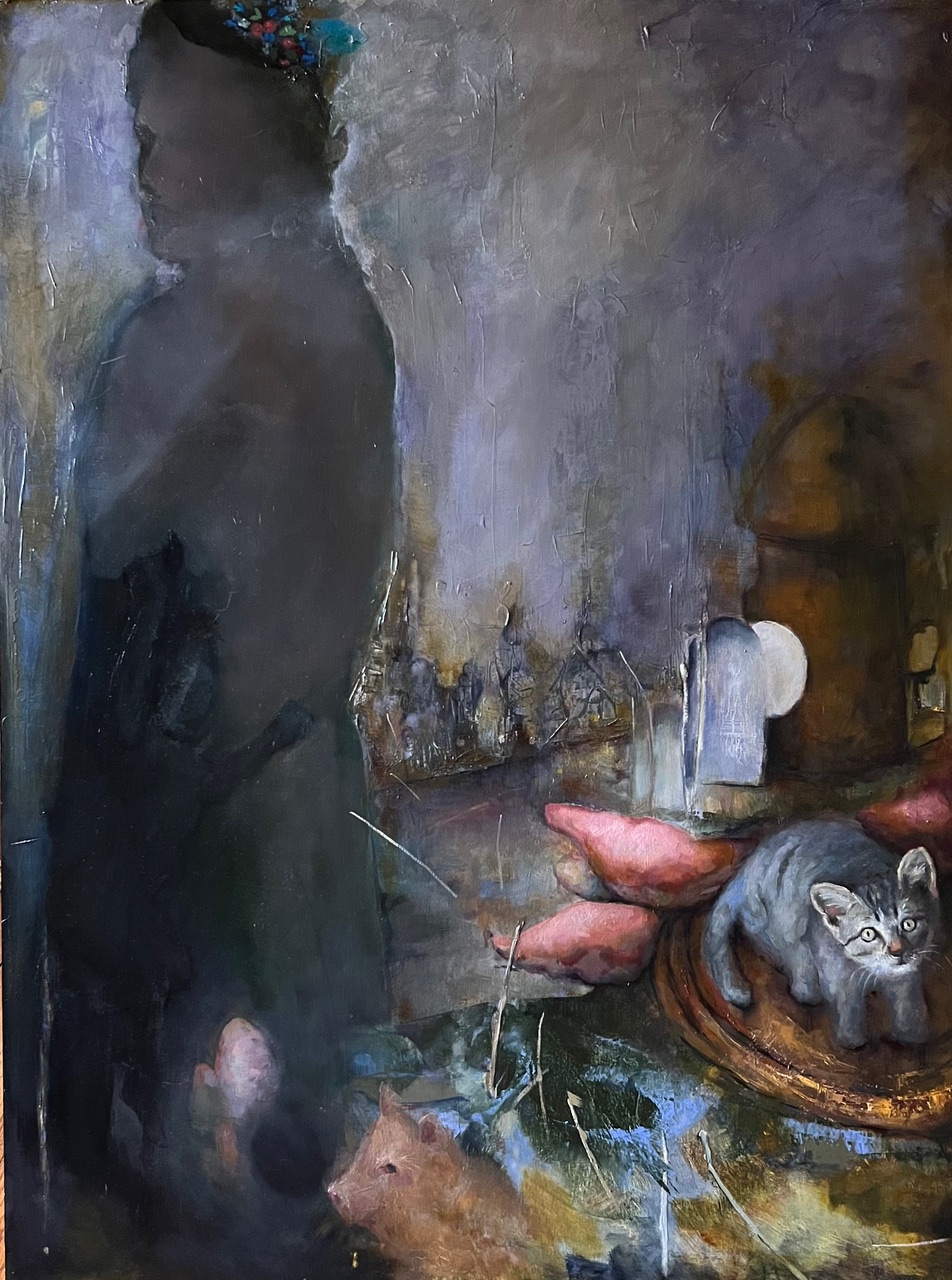
Soften into Spirit
6. Anything else you would like to say about dream art?
Dream art offers a path toward authenticity and originality because it comes from the deepest layers of the subconscious. Dreams disrupt conventional thinking—time collapses, logic dissolves, impossible combinations arise. This frees the work from imitation or expectation and allows emotion to take precedence over explanation. Dream art doesn’t need to make sense in a traditional way. It asks us to feel, to listen, and to trust that something meaningful is unfolding. When we engage dreams through art, we stay aligned with our own truth—and invite others to do the same.
To see more from Amy Lloyd visit the website http://www.amylloydart.com or instagram page @idreamipaint